
The client
Who Leroy Merlin is, the DIY retailer with around 8,000 employees in more than fifty stores that turned thirty in Italy
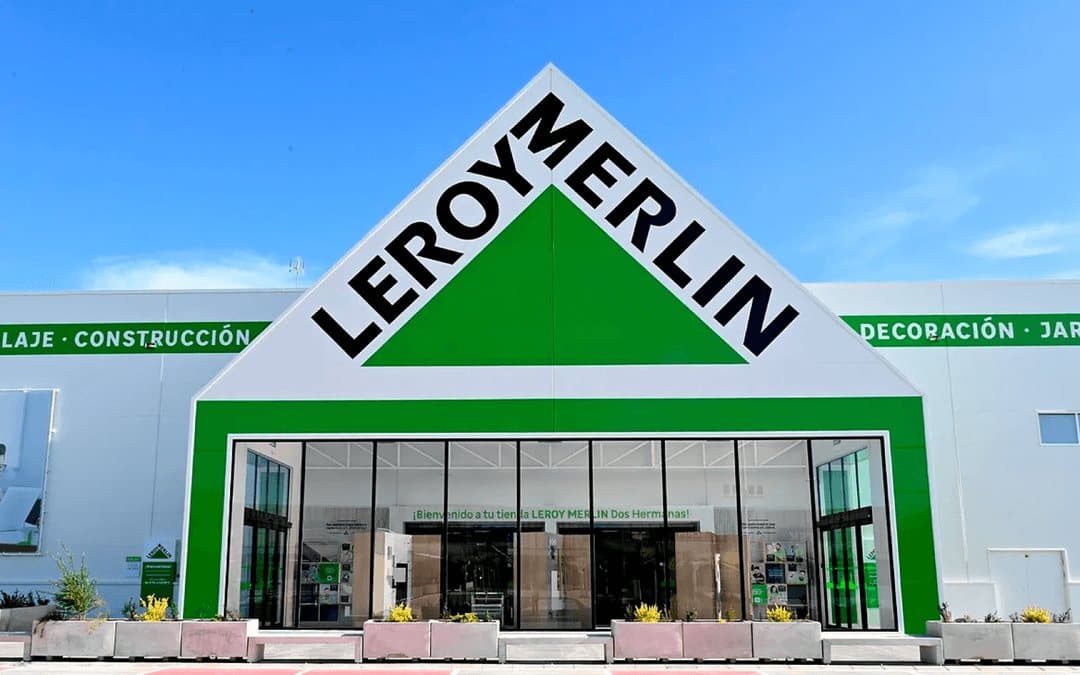
Leroy Merlin is a large-scale retailer specialising in DIY and home improvement, part of Groupe Adeo, one of the main operators in the sector in Europe and worldwide. Leroy Merlin’s Italian story began in 1996 with its first store at Solbiate Arno (Varese), and in 2025 the company celebrated its first thirty years in the country. Today Leroy Merlin has more than fifty stores and around 8,000 employees across many regions, inside a group of several brands in several countries with around 150,000 people.
Leroy Merlin’s offer covers products for home and garden, experiences and services, up to turnkey renovation solutions, organised in the bathroom, garden, building, project, technical and decorative worlds. Luca Cattaneo, HR Training & Development at Leroy Merlin, and Laura Borghini, Internal Communication & Corporate at Leroy Merlin, spoke about Wibo’s session.
The challenge
Why Leroy Merlin’s HR team wanted AI to sit beyond the digital team alone
Leroy Merlin’s Human Resources team wanted to become a strategic player in AI adoption, instead of leaving AI to the digital team alone. The account of Luca Cattaneo, HR Training & Development, and Laura Borghini, Internal Communication & Corporate, starts from a double tension.
On one side, the HR role at Leroy Merlin is moving from a traditional function to an engine and accelerator of the business. On the other, artificial intelligence is now strategic to stay competitive, yet Leroy Merlin does not yet have a structure that builds it into people’s daily work. The concrete challenge is adoption.
The programme
How Wibo built AI awareness in Leroy Merlin’s HR team, starting from governance and structure
Wibo built awareness in Leroy Merlin’s HR team before technical skill. The practical message of the session is that AI adoption needs governance and a structure, agile, modern and contemporary, that gives initiatives a context. Without it, initiatives multiply without producing results.
Wibo’s facilitator quickly tuned in to Leroy Merlin’s codes, language and culture. The facilitator alternated strategic vision with suggestions that apply to daily work.
The impact
What Leroy Merlin’s team took from the AI session, from context to integration
Of the contributions at Leroy Merlin’s company event, the one on AI was seen as the most engaging. The topic was new, not overused, and spoke to very different functions. Reactions varied because each participant projected the tools onto their own area, from communication to social affairs to safety, and asked where they could be applied.
One key realisation came out of Wibo’s session. The value of AI sits at the edges of the process, that is in identifying the problem, experimenting and evaluating the result. Moving from basic use to an AI colleague you can delegate to takes order, context and method.
Leroy Merlin was looking for a partner that could combine inspiration and concreteness, and in Wibo it found simplicity, closeness and direct language. The experience had a phase of rupture, a positive shock and new awareness, closed by a moment of reassurance. Asked in the interview for the most valuable thing to take home, the answers were “contesto” (context) and “integrazione” (integration).